The Third Garissa County Integrated Development Plan (2023-2027) guides economic recovery, basic service improvements, climate change adaptation, and socio-economic transformation.
Summary
Garissa County Integrated Development Plan Summary (2023-2027)
This summary highlights the main goals, development priorities, sector focus areas, and implementation issues in the Garissa County Integrated Development Plan (CIDP) 2023-2027.
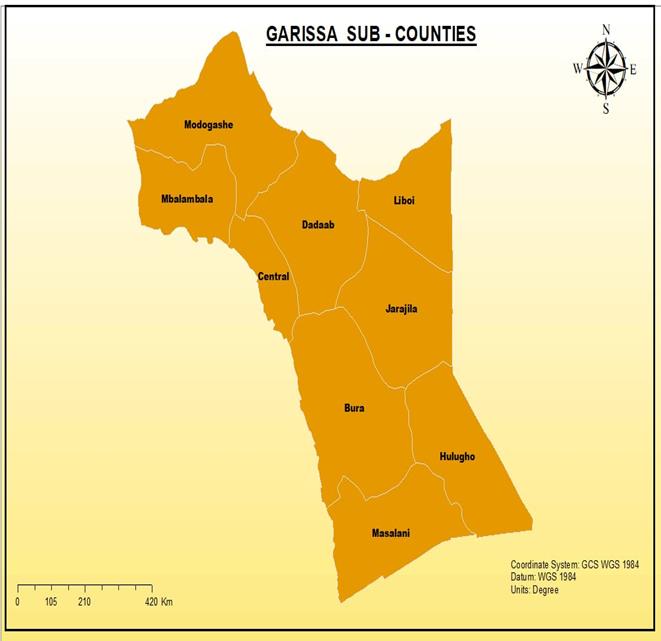
Garissa County Summary
Executive Summary
The Third Garissa County Integrated Development Plan (2023-2027) is a roadmap for economic recovery, foundational improvements, climate change adaptation, and socio-economic transformation. Developed through extensive public participation across all 30 wards, it integrates national and international development agendas. The plan details the county's overview, performance review, spatial framework, development priorities, strategies, flagship projects, and implementation and monitoring frameworks, aiming for tangible service delivery and improved livelihoods.
Key Priorities
- Enhance economic recovery and growth.
- Improve accessibility and quality of basic services.
- Mitigate the impacts of climate change.
- Foster people-responsive socio-economic transformation.
- Strengthen health services and healthcare access.
- Boost the agricultural and livestock economy.
- Promote trade, investment, and enterprise.
- Develop and maintain essential infrastructure.
Sectors
- Finance and Economic Planning
- Health Services
- Agriculture, Livestock, and Pastoral Economy
- Water, Environment, Energy, Climate Change & Natural Resources
- Trade, Investment and Enterprise Development
- Roads, Transport, Public Works, and Housing
- Gender, Social Services, Culture, Youth and Sports
- Education, Information, and ICT
Challenges
- Arid climate conditions causing droughts and floods.
- High poverty and food insecurity.
- Limited access to essential services in remote areas.
- Inadequate infrastructure (water, transport, energy).
- Economic vulnerability due to high dependency on livestock.
- Socio-cultural barriers affecting education access.
- Strain on resources from a large refugee population.
- Low investment and limited economic diversification.
- Environmental degradation and resource management issues.
- High youth unemployment.
Implementation
- Limited financial resources.
- County administration capacity constraints.
- Coordination challenges among departments and partners.
- Logistical difficulties in reaching remote areas.
- Need for enhanced public participation.
- Efficient resource mobilization and management.
- Security concerns in specific areas.
Notable Facts
- Total Area: 44,753 Km²
- Projected Population (2022): 905,087
- Projected Population (2027): 1,012,920
- Annual Population Growth: approx. 3.5%
- Dominant Livelihood: Livestock production
- Number of Sub-Counties: 10
Ask About This Plan (Preview)
Ask about this plan, ask about this county, or compare this county with another county. A full question-and-answer view is coming soon.
Ask about this planAsk about this countyCompare this county