CIDP Document

Baringo County Integrated Development Plan (2023-2027)

This page summarizes the Baringo County Integrated Development Plan (CIDP) for 2023-2027. It outlines the county's development aspirations, strategies, and programs aimed at transforming the lives of its people.

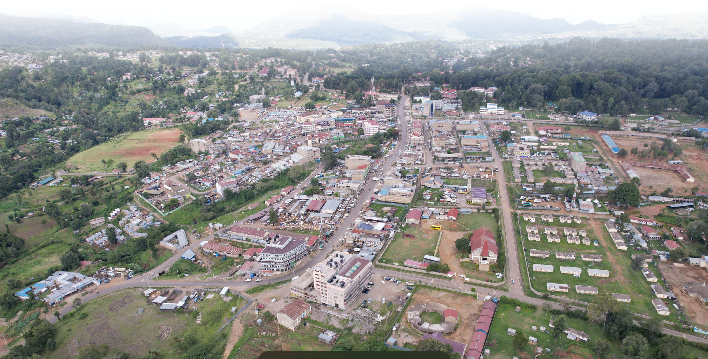
Baringo County county visual
Baringo County 2023-2027

The Baringo County Integrated Development Plan (CIDP) 2023-2027 outlines strategies to enhance productivity, create wealth, and improve service delivery for the highest standard of living.

Overview

This CIDP serves as Baringo County's master plan for 2023-2027, focusing on increasing productivity, wealth creation, project completion, and service delivery under the theme 'Delivering as One to Transform the Lives of the People of Baringo to the Highest Standard of Living.' It aligns with national and international development agendas.

Development Priorities

  • Enhance energy, infrastructure, and ICT services.
  • Protect the environment and manage water resources.
  • Develop agriculture, rural, and urban areas.
  • Promote economic growth and commercial activities.
  • Improve health services and access to care.
  • Strengthen social protection and cultural activities.
  • Expand access to quality education.
  • Ensure effective governance and intergovernmental relations.

Priority Sectors

  • Energy, Infrastructure & ICT
  • Environment, Water & Natural Resources
  • Agriculture, Rural and Urban Development
  • Economic & Commercial Affairs
  • Health Services
  • Social Protection, Culture & Recreation
  • Education
  • Public Administration & Governance

Key Challenges

  • High poverty and multidimensional poverty rates.
  • Climate change impacts (droughts, floods).
  • Resource-based conflicts and insecurity.
  • Limited access to clean water and sanitation.
  • Inadequate infrastructure (roads, lighting).
  • Low county revenue generation.
  • High youth unemployment.
  • Disparities in development indicators.
  • Disaster risk management challenges.

Implementation Issues

  • Insufficient budgetary allocations.
  • Low absorption rates in some sectors.
  • Limited technical and financial capacity of contractors.
  • Slow procurement processes.
  • Staffing shortages in key departments.
  • Impact of external factors (e.g., pandemics).
  • Insecurity affecting project access.
  • Underutilization of key infrastructure.

Plan Structure

Chapter One: COUNTY OVERVIEW

Provides background on Baringo County, including location, demographics, and poverty levels.

Chapter Two: PERFORMANCE REVIEW OF THE PREVIOUS CIDP PERIOD

Analyzes the performance of the 2018-2022 CIDP, identifying challenges and lessons learned.

Chapter Three: SPATIAL DEVELOPMENT FRAMEWORK

Outlines the spatial plan for development projects, aligning with national strategies and resource potential.

Chapter Four: DEVELOPMENT PRIORITIES, STRATEGIES AND PROGRAMMES

Details the county's development priorities, strategies, and programs aligned with national and international agendas.

Chapter Five: IMPLEMENTATION FRAMEWORK

Describes institutional arrangements, resource mobilization, and risk mitigation for CIDP implementation.

Chapter Six: MONITORING, EVALUATION AND LEARNING

Establishes the framework for monitoring, evaluating, and learning from CIDP implementation.

County Profile

Baringo County is in Kenya's Rift Valley Region, covering 11,075 Km², with 221 Km² of surface water. It is largely arid and semi-arid.

The county had 666,773 residents in 2019, projected to reach 794,793 by 2027, with 89% living in rural areas.

In 2015/2016, Baringo's poverty rate was 39.6%, with 8.5% in extreme poverty. Multidimensional poverty affects 60.3% of the population, with women disproportionately impacted.

Important Statistics

IndicatorValueNote
County Area11,075 Km²Includes 221 Km² of surface water.
2019 Population666,773Comprised of 336,322 males and 330,428 females.
Projected Population (2027)794,793Based on intercensal population growth rate.
Overall Poverty Rate (2015/2016)39.6%National average was 36.1%.
Multidimensional Poverty Rate60.3%National average was 53%.
Agriculture Contribution to GCP58%Agriculture is the backbone of the County Economy.
Human Development Index (HDI)0.5108Lower than the national HDI of 0.575.
Youth Development Index (YDI)0.5952Above the national index of 0.5817.

Official PDF

Open the source document to verify sections and references directly from the official PDF.

Frequently Asked Questions

What is the Baringo County Integrated Development Plan (CIDP) 2023-2027?

The CIDP 2023-2027 is Baringo County's master plan for development and service delivery over five years, focusing on increasing productivity, wealth creation, and improving living standards.

What is the main theme of the Baringo CIDP 2023-2027?

The theme is 'Delivering as One to Transform the Lives of the People of Baringo to the Highest Standard of Living.'

What are the key development priorities for Baringo County in this plan?

Key priorities include enhancing energy, infrastructure, and ICT; protecting the environment and water resources; developing agriculture and urban areas; promoting economic growth; improving health services; strengthening social protection; expanding education; and ensuring effective governance.

What are some major challenges facing Baringo County?

Challenges include high poverty, climate change impacts, resource conflicts, limited water and sanitation access, inadequate infrastructure, low revenue, and high youth unemployment.

How is the CIDP structured?

The plan has six chapters: County Overview, Performance Review, Spatial Development Framework, Development Priorities, Implementation Framework, and Monitoring & Evaluation.

What is the role of agriculture in Baringo County's economy?

Agriculture is the backbone of the county's economy, contributing 58% to its Gross County Product (GCP).